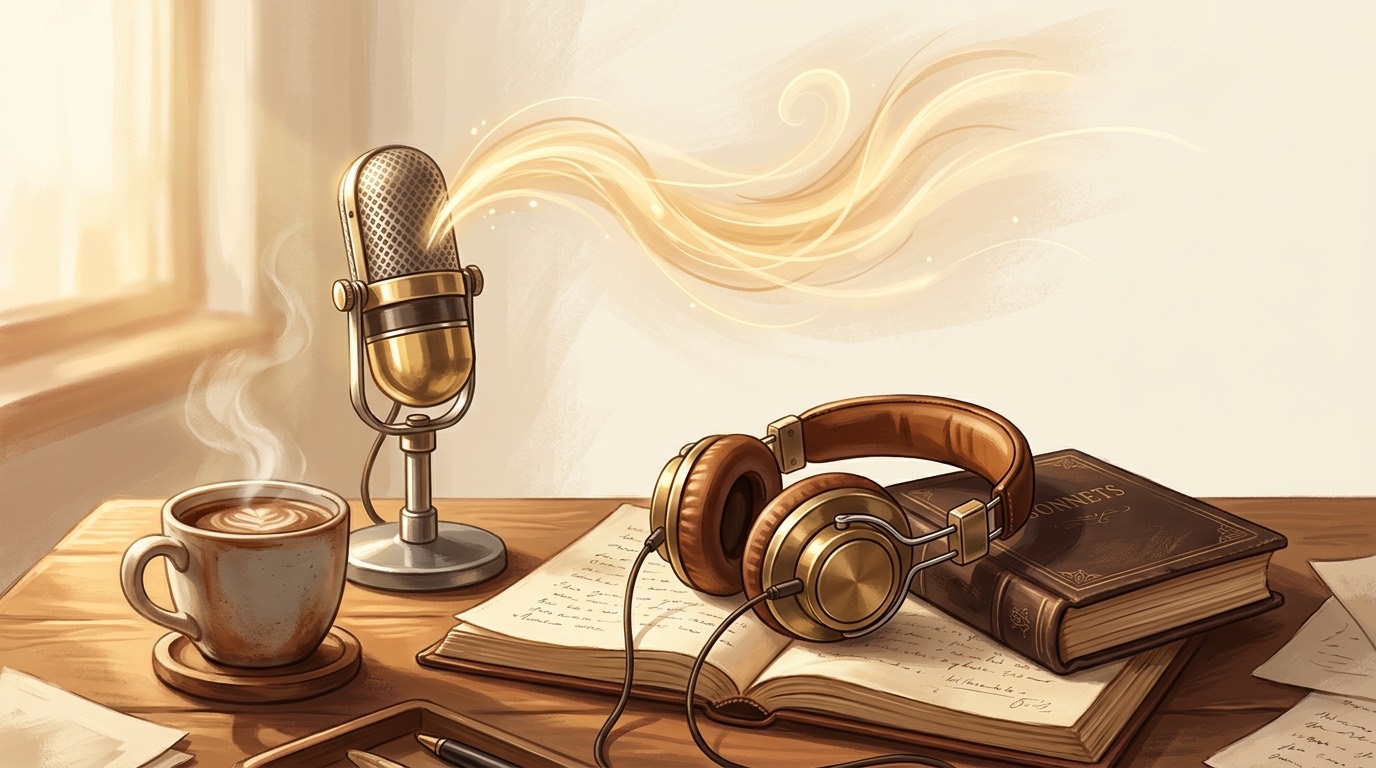
How to Copyright an Audiobook (Book, Recording, or Both)
Have a manuscript ready? Turn it into an audiobook with AI voices.
You finished the audiobook, the files sound right, and now a quieter question shows up: do I need to do anything to copyright an audiobook, and what exactly am I protecting? The short version is that copyright exists automatically once your work is fixed in a recording or on the page, but registering with the U.S. Copyright Office is a separate step with its own benefits. An audiobook also involves two different works, the book and the recording, so each one gets its own thinking.
This is general information, not legal advice. If you have a contract dispute, a co-owner or a real infringement problem, a copyright attorney is the right call.
Two works, not one
Picture your audiobook as two layers. The first is the literary work: the words you wrote. The second is the sound recording: the captured performance a listener hears. The Copyright Office's Circular 56 on sound recordings draws this line clearly. It lists a person reading a book as an ordinary example of a sound recording, and it says the copyright in a recording covers the recording itself, not the words or music inside it.
So registering the book does not register the audio, and registering the audio does not register the book. They can be owned by different people, protected for different reasons and registered on different applications.
| Who made the audio | Who generally holds the recording rights | What to check |
|---|---|---|
| You narrated and recorded it yourself | You, as performer and producer | Nothing unusual, unless a collaborator or editor worked on it |
| A human narrator you hired | Depends on your contract | Work-for-hire language, ownership and license terms |
| Audio produced with AI voices | Unsettled for fully machine-generated output | How much human direction, selection and editing went in |
On the first row, Circular 56 explains that the author of a sound recording is the performer featured in it and the producer who captured and processed the sounds. If either made it as an employee, the employer is generally the author as a work made for hire. If a narrator was an independent contractor, what happens depends on the written agreement, so read it.
What changes when AI does the narrating
The Copyright Office has said that copyright protects only material that is the product of human creativity. Its AI page collects the guidance, including the Part 2 report on copyrightability, which concluded that prompts alone do not make a user the author of AI output. Human contributions such as creative selection, arrangement and editing can be protected, case by case.
Circular 56 adds a relevant point: sound recordings captured by purely mechanical means without originality lack enough authorship to be protected. For a fully automated voice read, that leaves a real question about whether the audio qualifies at all. I will not claim it is settled, because it is not. What I would do is make human decisions visible: choose and assign the voices, adjust the text for listening, correct pronunciations, set pacing, and edit and master the result. For the ownership angle in more depth, see who owns an AI-narrated audiobook.

Your recording and your manuscript are two separate pieces of paperwork. Treat the audio as its own project from the first day.
Registration: what it adds and how to do it
You do not need to register to hold a copyright. You register to get the public record and the legal tools that come with it. For U.S. works, registration is generally required before you can file an infringement lawsuit, and timing can affect what you can recover. Those details are where a lawyer earns their fee, so treat this as orientation rather than advice. The Copyright Office's registration portal is where you start an application and where its current fees and processing information live. I am not quoting fees here because they change.
Here is how the recording application works.
Circular 56 describes what a sound recording application needs: a completed application, a nonrefundable filing fee, and a deposit of the work. A few practical points from that circular:
- Pick the right type of work. Choose "Sound Recording" at the start of the online application. If you choose wrong, you have to start over.
- Enter the title exactly as it appears on the work. Match your final audio and your store listing.
- State publication status. The circular explains that publication happens when copies of the recording are distributed to the public by sale, transfer, rental, lease or lending. If it has not been, mark it unpublished. If it has, give the date it was first distributed.
- Name the author correctly. That means the performer and the producer who captured and processed the sound, or the employer if it was work made for hire.
- Upload the deposit. For recordings that are unpublished or published only in digital form, the Office strongly encourages a digital upload, and each uploaded file must not exceed 500 MB. A long audiobook may need to be split into files that fit, so check the current upload rules before you start.
The circular also describes ways to register more than one recording on a single application, with conditions, so it is worth reading if your audiobook comes as many chapter files. The deposit becomes part of the public record and cannot be returned.
For the book itself, the process is separate. If you have not registered the text, start with how to copyright a book and then book copyright registration step by step. If you want to budget first, see what it costs to copyright a book.

Haven't registered the text yet? Start with how to copyright a book, then come back for the audio.
If AI touched the book or the audio
The Office's registration guidance for works containing AI-generated material, issued in March 2023, says applicants have a duty to disclose AI-generated content and briefly explain the human author's contributions, and that AI-generated content that is more than de minimis should be excluded from the claim. In practice, that means you identify what the AI produced and limit your claim to what you contributed. Accurate answers on the application depend on remembering what you did months earlier.
That is where a record helps. Disclosure: Copyrightable is an affiliate link, so audie.ai may earn a commission if you sign up. Copyrightable is free to capture your process as you work, including prompts, edits and decisions, so you are not reconstructing your timeline from memory when it is time to file.
A short checklist and the mistakes to avoid
- Book: confirm whether the text is registered, and register it if not.
- Recording: decide who the author is, and gather any narrator or producer agreements.
- AI use: list which parts were machine-generated and which reflect your choices.
- Files: finalize the audio before you apply, and keep the exact version you deposit.
- Titles: keep the title consistent across the application, the files and your listings.
The first is assuming one registration covers everything. The text and the recording are different works, and Circular 56 says the recording's copyright does not extend to the underlying words. The second is skipping the paper trail. If you used AI voices, you may need to explain how the audio was made, and a folder of dated notes beats a hazy memory. The third is changing the title or subtitle midway and then filing under a version that no longer matches your product page. And the fourth is waiting for someone to tell you it is time. Copyright exists already, so registration is a choice you make on your schedule, ideally before you need it.
Frequently Asked Questions
Is it necessary to register the audiobook if I already registered the book?
Registering the book does not register the recording, because they are separate works. Circular 56 says the copyright in a sound recording covers the recording and not the underlying words. Whether you register the audio is your call, and it is worth discussing with an attorney if the audiobook matters to your income.
Can I register an audiobook that uses AI voices?
You can apply, but be honest about how the audio was made. The Copyright Office says copyright requires human authorship, and its AI guidance asks applicants to disclose AI-generated material, describe the human authorship claimed and exclude more-than-de-minimis generated content from the claim. The outcome for fully machine-generated audio is uncertain, so document your human contributions.
What happens if I do not register my audiobook?
You still hold whatever copyright exists. For U.S. works, though, registration is generally required before you can bring an infringement lawsuit, so skipping it limits your options if someone copies your audio. Ask an attorney how timing affects your situation.
How long does registration take?
It varies with the Copyright Office's workload, so I will not guess at a number. The registration portal is the place to check current processing information before you plan around a date.
Disclaimer: I am a guide, not an attorney. This is general information and not legal advice.
Sources
- Circular 56: Copyright Registration for Sound Recordings (PDF)
- U.S. Copyright Office registration portal
- U.S. Copyright Office: Copyright and Artificial Intelligence
- Part 2: Copyrightability report (PDF)
- Registration guidance for works containing AI-generated material (PDF)
Get the audio finished first. A clean final file makes the registration step much easier.
Ready to produce the recording? Make your audiobook with Audie, pick voices for your characters, and keep notes on your choices as you go.
Audie
Audie is your guide to making audiobooks with AI at audie.ai. She helps authors turn a manuscript into a professional multi-voice audiobook - no studio, no fuss.